Suggestions

If you are looking for information on anything specific and cannot find it here, please leave a comment and I will sort out the information for you and post it at the earliest convenience.
Showing posts with label Secrets to marketing success. Show all posts

Tuesday, 9 September 2014

7 Tips to Create Facebook Ads That Convert

Are you already advertising on Facebook – but not yet seeing the results you hoped for? If you want your ad spending to yield more fans, leads or sales, you might just need to tweak your strategy a little bit to start seeing a better return on investment.

Here are 7 of my favorite Facebook ad tips for tweaking your approach, so your next Facebook ad results in higher conversion rates – and more business for you.

#1 Reach More Fans Through the News Feed

The number of users accessing Facebook on mobile devices has skyrocketed in the past year – today, 60 percent of all users are visiting Facebook on their phones and tablets. This has pretty serious implications for advertisers because when users access Facebook via mobile, there is no right-hand column – which means you can’t afford not to focus at least some of your advertising on News Feed placements.
And there’s data to back that up – according to a study by SocialCode, Facebook mobile ads earn up to 2.5 times more than desktop-only ads.
To get your Facebook ads into the News Feed (specifically Page Post ads, Page Like ads and Sponsored Stories), you have to use the Power Editor. It’s different (and a little more complicated) than the ads dashboard you’re used to, but there are plenty of resources to help you learn how.
The best way to get started is by using the free Power Editor Chrome plugin.  (How to set it up: Open Chrome, install the Power Editor, and access it here. Select “all” accounts when prompted so you can access your past ads too. Facebook has created a guide to using it.) But the main feature you’ll want to pay attention to is the “Placements” feature, which enables you to take any ad (like a Page Post Ad – my favorite) and select whether you want it to go to your users’ Desktop News Feeds, Mobile-Only News Feeds, or both. When you choose one or both of these options, your ad will ONLY be seen in the News Feed and not in the right-column.
I always choose both “Desktop News Feed and Mobile-Only News Feed” to get maximum exposure in the News Feed. Why do I not choose the right-hand column as well? Since making this shift to News Feed only ads, I’ve gone from about 0.1% Click Through Rate to between 4%-7%! To put it simply, ads in the News Feed get much more engagement than ads in the right-hand column on Facebook.
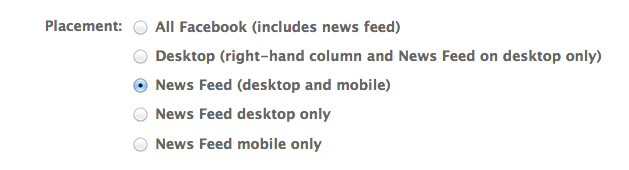
The main feature you want to pay attention to in the Power Editor is the Placement  feature, which enables you to take any ad for a Facebook Page, like a Sponsored Stories or Page Post Ad, and select whether you want your ad to go to your users’ desktop News Feeds, mobile-only News Feeds, or both. I always choose both for maximum exposure.
The main feature you want to pay attention to in the Power Editor is the Placement feature, which enables you to take any ad for a Facebook Page, like a Sponsored Stories or Page Post Ad, and select whether you want your ad to go to your users’ desktop News Feeds, mobile-only News Feeds, or both. I always choose both for maximum exposure.

#2 Jump-Start Your Lead Generation With Facebook Offers

One of my favorite things to do is to create Offers for my fans and non-fans in order to build out my email list. Offers used to be something only available to businesses with a brick-and-mortar location, and worked a lot like emailed coupons – but now any kind of business can use them.
Rather than create an Offer to sell a big product – say, a $1,500 coaching package – what I recommend is using an Offer to promote a FREE giveaway in exchange for users’ email addresses. After all, Offers get emailed right to your users – and their inbox is where YOU want to be!
So set up a simple landing page for your giveaway that requires an email and a name, and then create an Offer (with an enticing thumbnail) that links up to the landing page. Next, turn it into a Promoted Post directly via your Page wall (or, for more targeting options, go into the ads dashboard instead). You can also try targeting non-fans – or even fans of your competitors – if the Offer is juicy enough. (But see tip #7 first.)
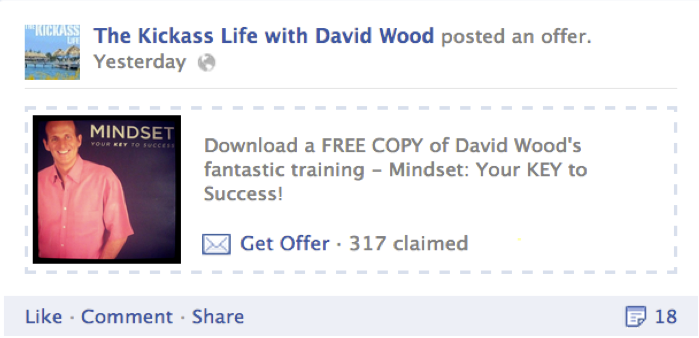
The best use of Facebook Offers is to create list-building opportunities like this example here from The Kickass Life Facebook Page.

If you want to try and drive sales vs. leads, try promoting the post to current fans (pin it to the top of your Wall for an extra push) and offering a specific dollar discount or free option, like this one:
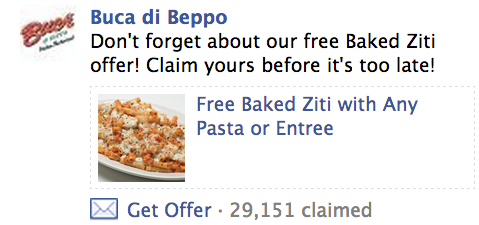
When using Facebook Offers for direct sales, such as those that promote a discount or coupon, first experiment by only posting it to your current fans.  If it's well received, then test it with a targeted non-fan segment.
When using Facebook Offers for direct sales, such as those that promote a discount or coupon, first experiment by only posting it to your current fans. If it’s well received, then test it with a targeted non-fan segment.

#3 Super-Charge Your Sales With “Custom Audiences”

 Sometimes, the conversion goal for an advertising campaign is simple: sell more.
In that case, it makes the most sense to target people who are already leads – like your email list. In the past, though, there was no convenient way to sync up your email list with your Facebook marketing.
That has since changed with the addition of the “custom audiences” feature – now you can upload your email list directly to Facebook, so that when you set up an ad, you can select them as a “custom audience” in the targeting section of the ads dashboard. Advertisers are already reporting a higher conversion rate on their ad spends (in one example cited by Facebook, an auto company saw a 24x return on their ads by using custom audiences in combination with Offers).

 #4 Save on CPC With Hyper-Targeted Advertising

If you focus most of your early marketing efforts on building a solid Facebook fan base – 5,000+ fans – you will start to see MUCH higher conversion rates right off the bat when you target fans-only in your ad campaigns. But you do need that core, solid fan base first so you have some critical mass to actually sell products or services.
How much savings can you expect? Well, as a result of targeting some of my key ads to only my own fans, I’ve paid as little as $0.07 a click – and seen FAR better conversions and sales as a result.
When you work hard to build a fan base first, you reap the rewards by getting better ad conversions…without breaking the bank!
As important as advertising is, your ability to create a thriving community – and engage them often – is the real secret sauce to getting better and better returns on your ad spending. For more tips on Facebook engagement, click here.

#5 Play by the 20-Percent Rule

Facebook recently revised their guidelines for Facebook ads that appear in the News Feed, like Promoted Posts, Offers and ads that you target to mobile Facebook users. Any image-based ad that goes out to the News Feed of users – like a still from a video advertising your next webinar, for example, or a product image offering a discount – can have a text overlay, but that text can’t take up more than 20 percent of the total ad image.
Make sure your image-based ads don’t get penalized before they get results!

What NOT to Do:
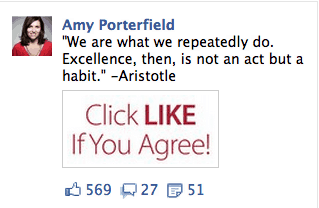
This ad will not be approved for placement in the News Feed because the ad image is more than 20% text. Instead, use ad images that are mostly graphic with minimal text.

Try This Instead:
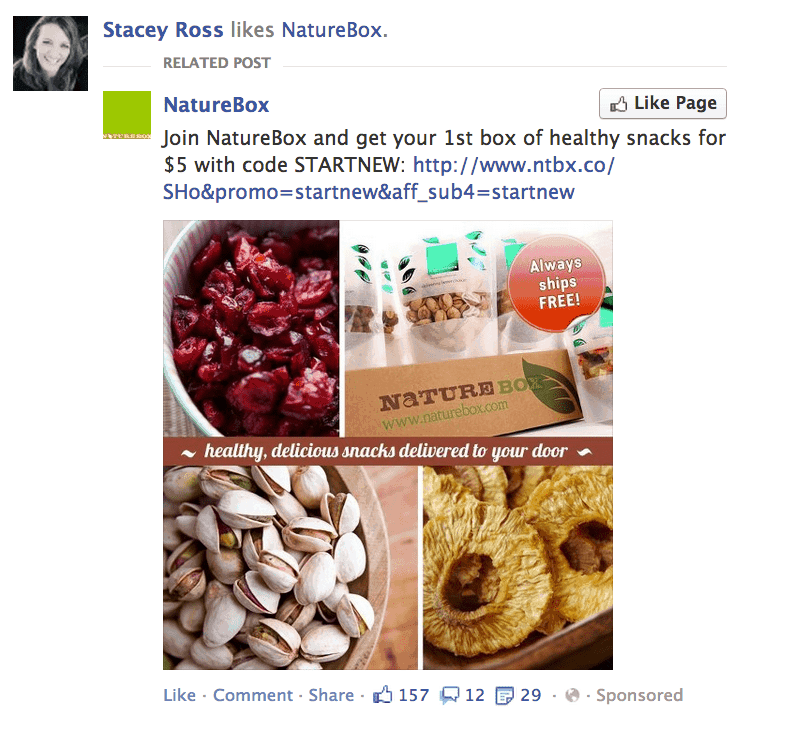
This ad image in this Page Post Ad is a great example an image with less than 20% text.  This ad would be approved for the News Feed.
This ad image in this Page Post Ad is a great example an image with less than 20% text. This ad would be approved for the News Feed.

#6 Get More Fans With the New “Like” Ads

To my point in tip #4, all businesses need a community first. Your ability to actual turn Facebook fans into leads and finally, paying customers is key to your business success — to the extent that you can keep those numbers engaged and genuinely interested, of course!
Which is where the new “Like Ads” come into play. These are designed mainly to help you grow your total number of fans, and are useful to anyone in the early stages of community building (or whenever you’re ready to grow your existing community). Unlike most ads, these “Like Ads” do well when they appear in the right-hand column, so I would not limit them just to the News Feed.
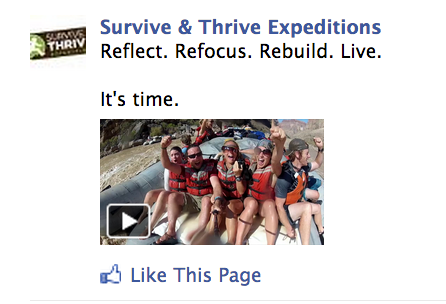
When non-fans see your Page Post Ad in the right-hand column on Facebook, they will have an opportunity to LIKE your Page directly from the ad.

To get new people interested and engaging with your brand, it’s important to establish trust and affinity up front. I know I talk about the power of video often, but this is one spot where you really want to think about leveraging video. It’s personal and it builds instant trust more than any product image, promotion or deal ever could. Keep it short, tease with one clear benefit and always include a call to action!

#7 Get Smarter With Promoted Posts

Promoting posts is a great way to get more eyeballs on your status updates. Whether your goal is engagement (maybe you asked a fun question you want fans to weigh in on), conversions (like driving fans to sign up for a free webinar in exchange for an email address) or sales, the fact is, Promoted Posts work best with one audience: yours. Your fans already know you, trust you, and want to engage with you.
A Promoted Post – and specifically, the “Sponsored Story” that gets automatically created with it – looks  a lot like spam to a user who has never liked your Page or interacted with your brand before. What would you do if you saw this in your feed and you’d never heard of the brand advertising it?
Between you and me, we’ve all seen these and thought they were tacky. But there’s a real danger that a user might complain that your Promoted Post is spam. So my best tip is toonly target fans with Promoted Posts. They are the most likely to engage and convert anyway, so why widen the net? And take that extra step to delete the Sponsored Story that gets automatically created (here’s how) too, to be extra safe. Just because some advertisers take advantage of Facebook doesn’t mean you should.

Monday, 1 September 2014

6 Psychological Triggers that Win Sales and Influence Customers

Whenever anyone asks me what marketing books I recommend that will help them sell more, the very first one I point them to is “Influence” by Robert Cialdini, published in 1984.
A professor of psychology and marketing, Cialdini lays out six ways you can get people to say yes to what you're asking. Anyone who sells things for a living, online or offline, should know, love, and live these principles:
  • Reciprocity
  • Commitment & Consistency
  • Liking
  • Authority
  • Social Proof
  • Scarcity
Let's take a look how you can build some of these influence triggers into your online store to start getting more sales and customers.

1. Reciprocity

The principle of reciprocity means that when someone gives us something we feel compelled to give something back in return. Have you ever gone to Costco ended up with an unplanned sausage purchase in your cart because you felt a nagging obligation to buy because you tried a free sample? Well, that was the principle of reciprocity in action.
Of course, online retailers can’t personally visit the house of each person who interacts with them to shove a sample in their hand. So how can you make reciprocity work for you?

Free Gift With Purchase

You might not be able to offer something in advance, but you can definitely offer something alongside. This tactic is a favorite of cosmetic and beauty products as demonstrated below by Ultra Beauty.
Even if you don’t advertise the gift in advance, slipping samples of other products into your shipped product can create the feeling of having received a gift that might earn you a second purchase.

The Gift Of Content

Content can be a good way for online retailers to provide value to potential customers—in effect, giving them a gift. For example, StyleSeek presents new users with a fun quiz they can go through to reach recommendations for clothes that match what they like:
True & Co, an online lingerie retailer, helps women figure out the right size and style of bra for them:
So whether it’s a guide for how to make the perfect vinaigrette or an exclusive author interview, use content as an ethical bribe that makes people feel grateful towards your business. 

2. Commitment & Consistency

The principle of commitment and consistency says that people will go to great lengths to appear consistent in their words and actions - even to the extent of doing things that are basically irrational.
That’s why if you’re trying to make a change in your life - losing weight, for example - it can be very helpful to state your goal publicly. Once you’ve committed out loud (or online) you will have much more incentive to keep up your end of the bargain.
As a retailer, if you can get customers to make a small commitment to your brand (like signing up for your email newsletter), they are more likely to eventually purchase from you. And if you can actually get products in their hand, even if there is no official commitment to buy them, your chances increase even more.
This is the principle behind Warby Parker’s Home Try-On Program:
Warby Parker knows that with a product that sits right in the middle of your face all day, look and fit are important. They also know that if they can get a set of frames in your hands, they are probably about 50% of the way to making a sale. So they make it as frictionless as possible - order the samples, get the box, order the frames you want, and send the box back for free. They say there's no commitment, but they are wise students of Cialdini - they know the customer feels the commitment the minute they open the box.
Zappos’ famously easy return policy is another example of this - there is less friction for the customer to buy because they know that if they don’t like it they can return it. But once they have the product in their hands, will they really return it? Probably not. They're already committed.

3. Liking

The principle of liking says that we are more likely to say yes to a request if we feel a connection to the person making it. That’s why the sausage sample lady at Costco is always giving you a nice smile.
It’s also why brands hire celebrities to endorse their products - so that people will transfer their love of Roger Federer to watches he’s endorsing.
There are lots of ways to make this principle work for your store:

Telling Your Story

As a direct-response marketer I tend not to truck much with branding. But if there’s one place that branding is essential, it is in triggering the principle of liking.
Every element of your store - colors, fonts, photo styles, copy - contributes to your brand personality, and your goal is to create a personality that is cohesive and that your target customer will like. This might be brisk and efficient if you are selling into a business market, warm and playful if you’re selling children’s products, 'earth-mothery' if you’re selling natural products.
Many stores will include something like an “About Us” page that is basically brand personality distilled. Here’s an example from Hiut Denim Co:
And one from jewelry designer Elva Fields:
This is a great way to sum up your story and to get people to like you.

Use Models People Can Identify With 

If you’re selling clothing, jewelry, or accessories, one quick way to create a connection to your customer is to show your stuff on people they will identify with and like. This doesn’t mean you need to book Russian supermodels; it’s best if they look like your customers. This might mean funky and cool, like So Worth Loving:
Casual and athletic, like Title Nine:
Or preppy, like Southern Marsh:

Social Links

People are more likely to purchase something if it’s recommended to them by someone they know and trust. So make sure that your product pages have links to Twitter, Facebook, Pinterest, and Google+ so that your customers can tell their friends about the great product they just found on your site.
I know this sounds obvious, but I had to poke around to find examples, especially with smaller stores. But tea shop Little Sparrow is doing it right:
And so are more well known brands, like Fab:

Display What Others Are Buying

Have you ever noticed someone wearing the same shoes or shirt as you and mentally saluted their fine taste? You probably felt a quick connection with that person based solely on that one data point.
Stores can play off that idea by presenting products that are similar to what the person is browsing, as seen here in the online store for the comic The Oatmeal:

4. Authority

Most people have heard of the famous Milgram experiments, in which volunteers were convinced to continue delivering what they thought were incredibly painful electric shocks to unseen subjects, even when they could hear (faked) screams of pain. The presence of a man in a lab coat telling them to continue was enough to earn the compliance of nearly all the volunteers.
People appear hard-wired to respond to authority (or the appearance of authority). How can you use this to sell?

Expert Creation

Does your product have a scientific secret sauce? Display content from professionals with credentials likeHerbalife:
Is it hand-crafted by trained artisans? Tell the world all about them like Dodocase:
And of course books are another great example of this. Are you more likely to buy a run-of-the-mill book about how to cook French Food… or one by Jacques Pepin? Cookbook Village knows that big names sell books and they have a whole section for big name chefs:

Expert Curation

These days the range of products available to a shopper are so vast it’s hard to wade through them all—and that’s why “curation” has become the buzzword of the moment.
Do you have a Chief Stylist (or someone who could reasonably pass for that)? Have a page with her top picks for the season. Selling fitness products? Have a personal trainer give his favorite picks. Even a little authority is enough; Kepler’s Books provides recommendations from each of their staff members:

5. Social Proof

The principle of social proof is connected to the principle of liking: because we are social creatures, we tend to like things just because other people do as well, whether we know them or not. Anything that shows the popularity of your site and your products can trigger a response.
Have you gotten good press? Mention it! Received loving emails from customers? Quote them! Gotten good feedback from your mom? Heck, get it up there. Look, cute tableware purveyor Camila Prada has done all three:
Another tactic is to provide a “Best Sellers” or “Most Popular” page, as demonstrated by Black Milkbelow. Are the anatomically-correct muscle leggings really their most popular, or just the ones that are most piled up in the warehouse? As a consumer, I don’t know. But by declaring these particular leggings the most wanted, Black Milk has given them a sheen of desirability.
And of course, ratings and reviews, a la Amazon & countless other retailers, are another fine way to show social proof.

6. Scarcity

Cialdini’s final principle is the principle of scarcity, which states that people are highly motivated by the thought that they might lose out on something. Call it the Eternal Teenager Principle: if someone tells you that you can’t have it - boy, do you want it. This is probably the one I’m the biggest sucker for, personally.
Marketers trigger this effect by using all kinds of tactics to suggest that products (or low prices) might soon be gone, or that someone is trying to keep this product off the market.

Deadlines For Sales

Lily Pulitzer is counting down to the second when she her summer sale prices will become unavailable.

Impending Out-Of-Stock Announcements

You want that cute toy box from ModMom? Well, you’d better hurry - there are only three left!

Seasonal or Limited Products

Every March when my friend gets her green Shamrock Shake from McDonalds she crows with happiness all over the social media. Think she’d be that excited if she could walk in and get it any time? Of course not. The knowledge that the supply is limited motivates her—and makes her feel like a success for having “won.”
And speaking of me being a sucker for this tactic, that’s exactly how I feel about my Pumpkin Spice Latte from Starbucks.


But What About Pricing?

You may be wondering where the extremely common retail tactics of sales & discounts fall under these six principles. Is Cialdini saying that price doesn’t impact people’s purchasing behavior?
Of course it does, and Cialdini mentions a couple of pricing experiments in the beginning of his book. But think of it this way: the price of your product represents the size of a risk someone is going to take on. In other words, people will be a lot more choosy over a $10,000 product than one that is $1.

Risk Removal

The six principles of influence represent additional non-obvious ways to impact perceived risk. For example, by using appeals to authority, you're decreasing the risk of a 'yes' - someone who says yes (to your appeal to buy a product) can always point to the authority you've demonstrated to rationalize their purchase. By using scarcity tactics, you're increasing the risk of a 'no' - someone who declines your offer right now might miss out.
So given a price that you have settled on for your products, using the principles of influence can decrease the risk of 'yes' (liking, social proof, authority) or increase the risk of 'no' (scarcity, consistency, reciprocity).
Sprinkle them throughout your site and watch your sales go up!

Wednesday, 30 July 2014

11 Marketing Psychology Tips to Tap Into Buyers’ Minds

Perhaps unsurprisingly, psychology has emerged as one of the most useful tools used by marketers. It gives us a glimpse into workings of the human mind, along with some useful techniques for subtly influencing it. Below are 11 useful tips that you can use to improve your customer engagement and your conversion rate.
1. Engage the Senses
Buying anything online can be a tricky proposition; people don’t necessarily have a chance to really see or touch the product before they commit to buying it. As a result, you’ll want to help your customers feel as though they know the product intimately. This can include high-quality product shots or testimonials from other customers. In other words: make them feel as though they already own it.
2. Use Emotion to Your Advantage
Humans are emotional creatures, and our range of feelings can be easily played to. The most effective marketing techniques have nothing to do with spewing product specs or shouting about how low prices are; instead, they’ve become about telling a story, about making the audience feel a deep and personal connection with the brands they interact with.
3. Assuage Suspicions
Most of us are naturally suspicious; after all, the Internet is full of people who are only too willing to take advantage of overly trusting people. To that end, guiding customers along toward conversion involves no small amount of reassurance. Try to anticipate potential doubts or suspicions, and then do your best to reassure your customers. There are many ways to do this, such as backing up your claims with authoritative sources and providing reviews from existing customers.
4. Offer Exclusivity
11 Marketing Psychology Tips to Tap Into Buyers’ Minds image exclusivity
There’s no getting around the fact that online retailers and “big box” brick-and-mortar stores can be both cheaper and more convenient than buying direct. The solution to that problem lies in exclusivity; offer something that they can’t get anywhere else, and you’ll tap into customers’ love of owning something uncommon.
5. Provide Flexibility
If there’s one thing online shoppers hate, it’s a lack of flexibility. This can include everything from the checkout process itself to shipping and payment options. Don’t force customers to register; allow them to check out as a guest if they wish. In addition, offer a variety of payment options to make sure that nobody is left out.
6. Offer Fewer Choices
This one might seem just a little bit strange, but it definitely plays to a well-established phenomenon in psychology. People tend to get overwhelmed when presented with more than one or two choices, which is why it makes sense to simplify your product offerings. By offering just a few very clear-cut choices to customers, you’re helping to ensure that they don’t lose their momentum in the face of an array of potentially confusing options.
7. Draw Comparisons
11 Marketing Psychology Tips to Tap Into Buyers’ Minds image product comparisons
Customers want to know that you stand behind your product. One way to demonstrate that confidence is to compare your offerings to those of your competitors. Show them in black and white why your products stand out from the crowd.
8. Take Advantage of Crowd Mentality
The reason why social media marketing is so effective is because people love “belonging” – that is, they love being a part of emerging trends. If you can, find a way to tie social media into your product offerings; reveal just how many people have clicked that “Buy” button, or how many people in their networks have subscribed.
9. Explain the Benefits to Your Customers
Whether online or offline, impulse buying is an important thing to capitalize on, and tends to be fairly effective in the eCommerce world. That said, more expensive or involved purchases need to play the game of reciprocity. If you’re expecting your customers to commit to making a big decision, whether it’s parting with their money or simply giving up their personal information, they need to have a very clear idea about what’s in it for them. Don’t by shy about explaining, clearly and concisely, in a way that will provide a feeling of self worth, precisely what they’ll be getting out of the arrangement.
10. Don’t “Sell” – “Impress” Instead
People staple their wallets shut and it takes a crowbar to get them open. The crowbar is, in this sense, direct advertising and propaganda. Show people the same ad enough times (20+) and they might finally cave in, at least once. However, there are other less intrusive and arguably more commendable paths to get wallets open without even showing them a product. This is content marketing psychology working at its finest. For example:
11 Marketing Psychology Tips to Tap Into Buyers’ Minds image worlds fasest roads
This infographic showcases, as you would guess, the world’s fastest roads. It’s filled with beautiful visuals and insightful statistics. This is content marketing. But, at a more subtle level, there is a psychological process going on. We are engaging the brand by sharing the infographic on social media with our friends and peerswhich is a type of referral. We comment about it which is a type of rating. By creating referrals and ratings in a setting free of “get your wallets out folks!” we soften the staple and remove the need for crowbar marketing.
11. Stop Forcing the Issue
It’s only too easy to start thinking that you have control over somebody’s behavior. The truth is that all we can do is attempt to influence, guide, and inform; when it comes to clicking the “Buy” or “Subscribe” button, only the customer can make that decision. Anything that attempts to push them more forcibly is only going to come across as off-putting or desperate. What you have to do is state your case clearly; what they do with that information is ultimately up to them.

The psychology of impulse purchase

The psychology of impulse purchase
Here's a new entrepreneur guest blog on the psychology of impulse purchase and what it has to do with entrepreneurs...

Retailers have been cashing in on impulse buying for decades. Theres probably no better example of this than supermarkets, where customers preferences are boiled down to a science: candy is placed at kids eye level, marked-down items all but jump off the shelves, and essentials like milk are shoved to the back so that shelf upon tempting shelf lies between them and the customer.


Youd think the recession would have curbed that, but no: a 2010 survey, Harris Interactive', commissioned by the National Endowment for Financial Education, shows that no less than 80% of Americans made an impulse buy in the past year. Its bad news for consumers - more than two out of three impulse buyers in the survey admit they regretted their purchases shortly after - but the implications for business owners are promising.


First, what drives impulse purchases? There are different views on this. According to Engel and Blackwell in 1982, an impulse purchase is anything you didnt have the intention of buying when you first entered the store, but bought anyway. Phillips and Bradshaw, in 1993, narrowed it down to the point of sale, saying a buyer can constantly change her mind about an item all the way to checkout. But Dennis Rook, in his 1987 paper The buying impulse, provided todays generally accepted definition: a sudden, often powerful and persistent urge to buy something immediately.


How impulse buys happen


An impulse purchase starts with exposure according to Specialty Retail Report. Its all about seeing the product - thats why supermarkets are paid a premium to put certain products on the front line. The next step is problem recognition: the product will remind the customer of a problem that the product in question can solve. Take, for example, the lumping together of chips, popcorn, and soda. A buyer may only come for a bag of chips, but the whole arrangement reminds him of his last movie night. So he grabs a 2-litre orange soda, and since hes already there, figures he might as well pick up some popcorn.


Entrepreneur Virgil Klunder pares it down further to just two things: pain and pleasure. Every customer buys to avoid pain or heighten pleasure, and the easier it is for them, the more likely the product will sell. It sounds simple enough, but millions of dollars are poured into market research every year in search of the straightest line to customer satisfaction.


Online, it happens a little differently. The general belief used to be that price was the main driving force in impulse purchases, an idea brought forward by consultancy firm Ernst & Young in 2000. But a study by User Interface Engineering found that only around 8% of impulse buys arise from special prices or promotions. Rather, it appears, people simply think of buying one item while shopping for another. Users who surf the website using category links were around three times more likely to make an impulse purchase than those who found the item through search engines. The latter takes them directly to the product they need, so theres little to no exposure to the rest of the store. By contrast, navigating the site is the online equivalent of zigzagging through the whole store.


The Costco effect and other case studies


Costco, the largest warehouse club in the US, uses a unique business model to maximize impulse buying. In an interview with The New York Times, the companys chief financial officer Richard Galanti said they work out what customers really want and stock a small number of popular items, say the top 4,000. This contrasts with the business models of Wal-Mart, which stocks up to 100,000 different items, or a typical grocery, which can stock around 40,000.


This promotes impulse purchases by limiting peoples options to trendy, popular items, which include anything from consumer electronics to packed lunches. They cater equally to bargain-seekers and the brand-conscious. They also create a sense of urgency by rotating items on a seasonal basis, urging people to buy on impulse because the item may be gone when they come back.


Apple exploits impulse buying using another model, that of associated buys. The company makes only a fraction of its fortune from hardware sales; the bulk comes from selling content for these gadgets for as low as $1, according to marketing consultant Jeff Bullas, apps for the iPhone and iPad are made by third-party providers, eliminating development costs for Apple while allowing them to charge a 30% commission on sales. Impulse purchase fits in nicely with this setup because $1.99 for a cute little game doesnt usually call for a lot of introspection. People just go ahead and buy it because its just two bucks - but when there are 200 million of them, the money gets serious.


Online retailers such as Amazon have combined impulse buying psychology with targeted marketing, recommending products based on a specific users purchase history. While supermarkets take a slight gamble at the checkout counter - not every customer will want breath mints - e-commerce sites make it so that the checkout is lined with things a buyer will most likely be interested in. A perennial book buyer will be bombarded with books from the same author or genre; one who has recently purchased a camera may be offered lenses, filters, and bags. And by eliminating the physical task of walking to the counter, these sites make impulse buying all the more effortless, according to Main Street, an online financial magazine.


Promoting impulse buys


Rook outlined five characteristics that define an impulse purchase:


An overwhelming attraction to the product

An intense need to buy the product at once

Ignoring negative consequences that may arise from the purchase

A feeling of excitement at buying the product

Conflicting feelings of indulgence and self-control
Obviously, when one makes an impulse buy the first four urges win over, and the self-control factor is brushed aside. To take advantage of impulse buying psychology, businesses must cater to these urges. Chintan Bharwada, marketing expert and contributor at focus.com advises businesses to relieve the negative feelings tied to impulse (e.g. guilt over unplanned spending) and highlight the non-economic rewards (e.g. contentment over a new gadget). Basically, their advertising should say, So its $500 you never meant to spend, but hey, youve got a nice new home theater! A complex environment that gets in the way of rational thinking, and thus makes impulses seem stronger, can also go a long way.

This also means eliminating the risk of an impulse purchase, according to Bharwada. This can be done through straightforward return policies and readily available credit. Knowing that they can change their mind, or at least not have to pay up in full if they do, makes an impulse buy seem less of a bad thing.


The new consumer


More recent research suggests that the old idea - that impulse buys should be displayed at the checkout counter - may be out-dated. For example, according to an Inc.com article, the cashier may not always be the best spot to put last-minute items because impulsiveness tend to die down the longer a customer stays in the store, and the more options they are presented with. However, they say, the urge can be rekindled through properly placed signs and promotions.


Most of our examples have obviously been industry-specific. Some demographics are simply more inclined to buy on a whim - women are more impulsive than men, for example - so businesses catering to this market will rely more impulse than rational thought. Also, more and more consumers are shopping online, and as weve explained above, this will require a whole new approach to marketing last-minute buys. At the end of the day it seems to come down to the age-old tenet of knowing your customers, and subsequently knowing how to trigger their impulses.